


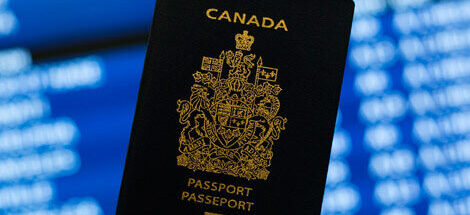
Since December 15, 2025, Canada’s citizenship law has changed in a fundamental way: Bill C-3 removed the so-called «first-generation limit» that prevented Canadians born abroad from passing citizenship on to their own children born outside Canada. The practical result is that thousands of people around the world — across Latin America, Europe, Asia and beyond — are already Canadian citizens and don’t know it. This guide explains who qualifies, how the ancestry chain is counted, and what steps to take to obtain your citizenship certificate.
At a glance
- Bill C-3 came into force on December 15, 2025 and removed the first-generation limit in several scenarios
- If you were born outside Canada before December 15, 2025 to a Canadian parent (including a parent made Canadian by these same changes), in most cases you are already a citizen automatically
- For births on or after December 15, 2025 in the second generation or later, the Canadian parent must have spent at least 1,095 days (3 years) in Canada before the birth
- The official proof is the citizenship certificate: a $75 CAD fee, with documents for every generation in the chain
- What matters is the ancestry chain (parent → grandparent → great-grandparent), not the country where you live today
What Changed With Bill C-3
Before this reform, Canadian citizenship by descent was limited to the first generation born outside Canada: if your parent was born in Canada and you were born abroad, you were Canadian — but your children, also born abroad, were not. That automatic cut-off is what Bill C-3 removed. Important: this change does not affect anyone who was already a citizen before the law; if you were already Canadian, you still are.
For this rule, the government counts generations as follows: the first generation is the first person born (or adopted) outside Canada to a Canadian citizen; the second generation or later is someone born outside Canada to a first-generation person. That second generation — and the ones after it — is who can now be Canadian.
Who Qualifies? The Two Scenarios
The December 15, 2025 date splits eligibility into two distinct regimes:
| Situation | Born BEFORE Dec 15, 2025 | Born ON/AFTER Dec 15, 2025 |
|---|---|---|
| General rule | In most cases, if you were born outside Canada to a Canadian parent, you are already a citizen automatically — the law restored or granted citizenship retroactively | In the second generation or later, you are Canadian if your foreign-born Canadian parent spent at least 1,095 days in Canada before your birth |
| Does the chain continue? | Yes: the rule also applies if you were born to someone who became Canadian because of these same changes — the cascade reaches grandchildren and great-grandchildren | Yes, but each new generation requires the parent to show those 3 years of physical presence in Canada |
| Adopted people | Likely eligible for citizenship through a direct grant if adopted outside Canada in the second generation or later | Eligible for the direct grant if the Canadian parent spent 1,095 days in Canada before the adoption |
What Matters Is the Chain, Not the Country
A common misconception: many people believe the rules differ by country of residence. They don’t. Eligibility depends exclusively on your Canadian ancestry chain — that your parent, grandparent or great-grandparent was a Canadian citizen, and that you can document every link. It makes no difference whether you live in Mexico City, Bogotá, São Paulo or Madrid: the analysis is the same. What does change from country to country are the local civil documents you’ll use to prove each birth (certificates, registry records) and, when they’re in another language, the need to translate them.
How to Apply for the Citizenship Certificate, Step by Step
If you think Bill C-3 made you a citizen, the only way to confirm it officially is to apply for the citizenship certificate (proof of citizenship). IRCC reviews your application and, if you are a citizen, issues the certificate — the document that then lets you apply for a Canadian passport.
- Reconstruct your ancestry chain. Identify your Canadian ancestor (born in Canada or naturalized) and trace every generation between that person and you.
- Gather documents for every generation. IRCC requires authentic, reliable and verifiable documents for each generation in the application (see the checklist below).
- Submit the application online or on paper. The fee is $75 CAD. Online, you have 60 days to complete the application once you start it; on paper, payment is still made online.
- Wait out processing. Current timelines are long due to the post-C-3 surge in applications — as of this writing, the official estimate is around 25 months. See our analysis: the certificate now takes 25 months.
- With the certificate, apply for your Canadian passport. That’s the order the government itself recommends before travelling to Canada as a citizen.
Typical Documents You’ll Need
- Your birth certificate (and those of every intermediate generation between you and your Canadian ancestor)
- Proof of your ancestor’s Canadian citizenship: a Canadian birth certificate, naturalization certificate or citizenship certificate
- Valid identity documents for the applicant
- Citizenship-format photographs meeting IRCC’s specifications
- Translations of any document not in English or French, per IRCC’s requirements
Frequently Asked Questions
I live in Mexico / Colombia / Brazil — do different rules apply to my country?
No. Canadian law doesn’t distinguish by country of residence or birth: only the ancestry chain and your date of birth relative to December 15, 2025 matter. The practical difference between countries lies in the local civil documents and their translations.
My parent never registered me as Canadian. Did I lose the right?
Citizenship by descent doesn’t depend on any «registration» done by your parents: if you meet the conditions of the law, you are a citizen automatically, and the certificate merely documents it. That’s exactly why so many people are Canadian without knowing it.
Do I have to give up my current nationality?
Canada allows dual (and multiple) citizenship, so there’s no conflict on the Canadian side. It’s worth checking your own country’s rules on multiple nationalities. And if the law made you Canadian automatically but you don’t want to be, there is a formal renunciation process.
How long does it take and how much does it cost?
The government fee is $75 CAD. Processing time is the hard part: the official estimate has climbed throughout 2026 due to the post-C-3 volume — check IRCC’s official tool for the current figure and our analysis of the jump to 25 months.
How Castle & Co. Can Help
The real challenge in these applications isn’t the form: it’s reconstructing and documenting an ancestry chain that sometimes crosses three generations, two languages and several civil registries. At Castle & Co. we assess your case, identify which documents are missing and prepare a complete application that doesn’t lose months to avoidable mistakes. Start on our Citizenship services page or request a free assessment of your family chain.