
Start Your Free Assessment

Tell us a bit about your case and a licensed consultant will get back to you.

Contact Us CC ENG

Castle & Co. does not provide job placement or recruitment services.
For job opportunities in Canada, you can visit our sister company’s career site, Workvantage, by clicking the button below.

Please Provide Full Details:

1. Proposed Position(s), Work Location(s), Hourly Rate, Hours per Week, Contract Duration.
2. Staffing at Location: Total Employee Count & Number of Temporary Foreign Workers currently employed.
3. Year of Business Incorporation/Establishment.
4. Additional Notes.

Please Include the Following:

1. Nature of Care (childcare, senior support, medical needs) & Profile of Care Recipient(s) (e.g., age, specific health conditions).
2. Living Arrangement (Live-in vs. Live-out), Hourly Rate & Hours per Week.
3. Prospective Applicant (if known): Age, Highest Educational Credential, Language Proficiency (English/French), and Related Work History.
4. Additional Notes.

Please Provide Full Details:

1. Sponsor’s Legal Status (Canadian Citizen or Permanent Resident) & Current Residence (Country/Province).
2. Partner Being Sponsored: Citizenship & Current Country of Residence.
3. Number of accompanying dependent children.
4. Sponsorship Background:
- Has the Sponsor submitted a sponsorship application in the past?
- Was the Sponsor sponsored as a spouse in the last 5 years?
5. Is the Sponsor currently in Undischarged Bankruptcy, receiving Social Assistance (welfare), or in default of child support or immigration loans?
6. Relationship Details: Date of Marriage or date common-law cohabitation began.
7. Admissibility Issues: Does the sponsor or the applicant have any history of criminal charges, severe health conditions, or prior visa denials from any country?
8. Current Status & Past Marriages: If the applicant is currently residing in Canada, what is their active immigration status? Have any prior marriages for either party been officially dissolved by divorce?
9. Additional Notes.

Please Include the Following:

1. Applicant Citizenship & Current Country of Residence (Please specify your Status, e.g., Worker, Student, PR).
2. Reason for Travel, Intended Arrival/Departure Dates & Length of Stay.
3. Are you visiting specific relatives or friends? (Please specify relationship).
4. Details of any previous Canadian or US visa applications or refusals.
5. Available Funds & Reasons to Return Home (e.g., Employment, Assets, Family obligations).
6. Additional Notes.

Please Include the Following:

If through your Canadian ancestry (you may already be a Canadian citizen by law — no residence, tax or language history needed):

1. Which relative connects you to Canada (parent, grandparent, great-grandparent…) and how they became Canadian (born in Canada, naturalized, or by descent).

2. What you can provide to support your claim (e.g., birth/marriage certificates, your ancestor's citizenship or naturalization record).

If you are a permanent resident (citizenship by grant):

1. Date your Permanent Residence was obtained.

2. Total number of days spent in Canada during the past 5 years (estimate is fine).

3. Did you hold temporary status in Canada (e.g., Student, Worker) before becoming a PR? If yes, type and duration.

4. Have you filed Canadian Income Tax Returns for at least 3 of the last 5 years?

5. Proficiency level in English or French (Basic, Intermediate, Fluent).

6. Prohibitions & Background: any criminal history (convictions, probation, or parole, inside or outside Canada); and whether you are currently subject to a Removal Order or under investigation by immigration authorities.

Additional notes (either case).

Please Include the Following:

1. Applicant (Parent/Grandparent):
- Citizenship & Current Country of Residence.
- Details of prior Canadian or US visa applications or refusals.
- Do you have any significant pre-existing medical conditions?
2. Host (Child/Grandchild in Canada):
- Legal Status (Citizen or Permanent Resident).
- Household Composition: Total count of individuals residing in the home (including spouse and dependents).
- Gross Annual Household Income.
3. Additional Notes.

Please Provide Full Details:

1. Employment Status: Do you have a valid Job Offer? (Include Employer Name, Role, LMIA approval status, or if applying as an Intra-Company Transferee).
2. Open Work Permit (if applicable): Please specify your category (e.g., Spouse of Student/Worker, PGWP, or International Experience Canada/IEC).
3. Background: Summary of relevant Work History and details of any previous Canadian visa applications or refusals.
4. Additional Notes.

Please Provide the Following Details:

1. Proposed Study Plan: Program Name, Academic Level (e.g., Diploma, Master's), and status of Letter of Acceptance (LOA).
2. Language Proficiency: Standardized Test Scores (IELTS, CELPIP, TEF).
3. Economic Establishment: Source of Funds & Ties to Home Country (reasons to return).
4. Visa History: Details of any previous applications or refusals for Canada or the US.
5. Additional Comments.

Please Provide Full Details:

1. Current Immigration Status: Type of permit (e.g., Visitor, Student, Worker) & Expiration Date.
2. Justification for Extension:
- Study: (e.g., New Letter of Acceptance).
- Work: (e.g., Updated LMIA or Job Offer details).
- Visitor: (Purpose of continued stay, e.g., ongoing tourism, family visit, or pending Spousal Sponsorship).
3. Additional Notes.

Please Provide Details for Principal Applicant and Spouse:

1. Personal Profile: Age, Citizenship, Marital Status, Highest Educational Credential, Language Proficiency (IELTS, CELPIP, TEF), and Settlement Funds.
2. Work History (Past 10 Years):
- Total years of Foreign Skilled Work.
- Total years of In-Canada Skilled Work.
3. Proposed Province of Residence (e.g., Ontario, Quebec, BC).
4. Canadian Ties: Relatives in Canada, prior Canadian study/work history, or Valid Job Offer.
5. Additional Notes.

1. What program do you need help with?
2. Share your current citizenship, residence, and immigration status—and whether you have family in Canada.
3. Are you looking to apply, renew or appeal?
4. Let us know if you're working toward a deadline or have key dates in mind.
5. Observations (provide details).

From CSQ to Permanent Residence: What Happens After Quebec Selects You

•
Start Your Process Now
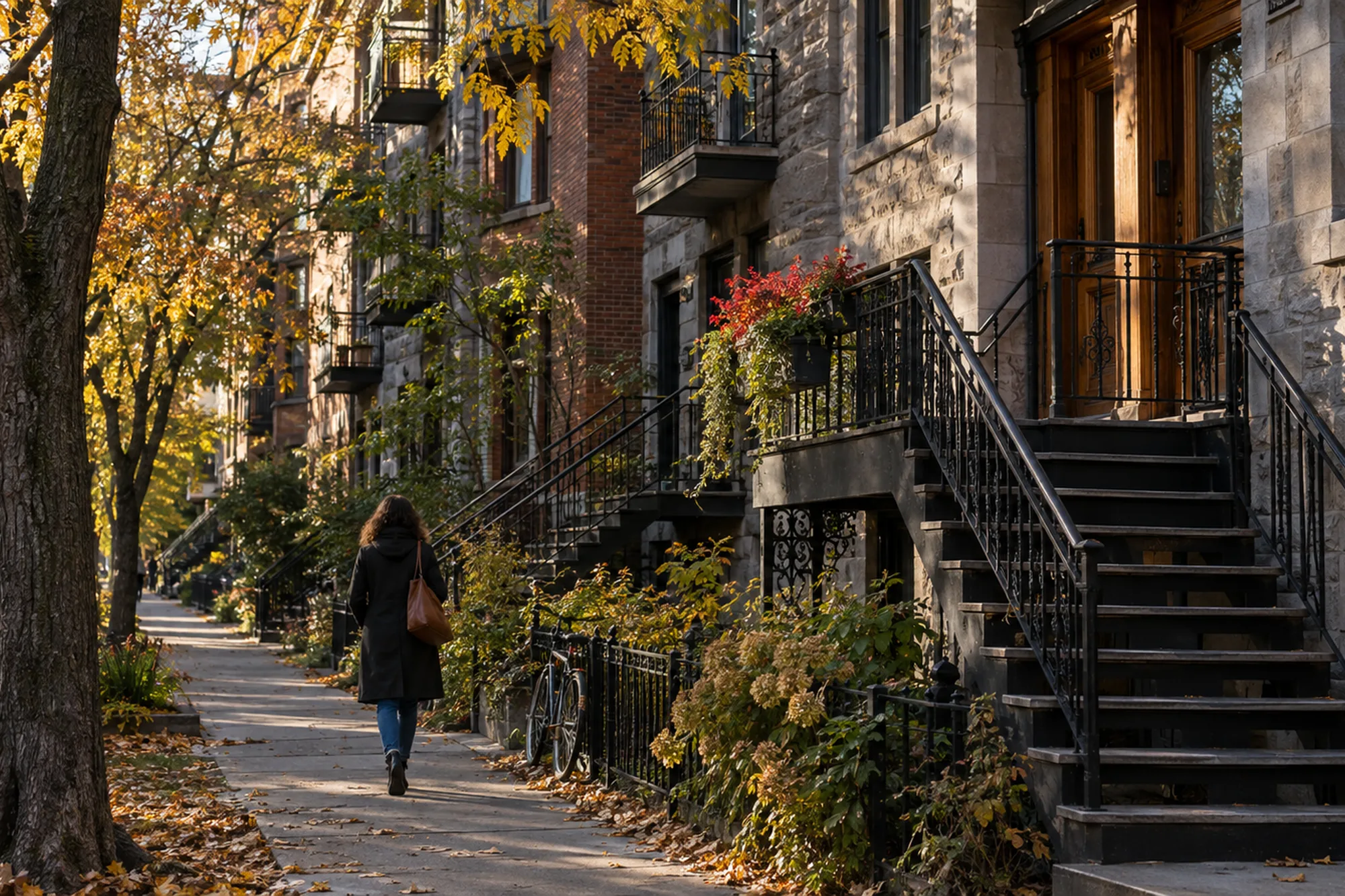
Couple reading a letter together on a Quebec street lined with stone row houses in autumn

Going from CSQ to permanent residence is the second half of immigrating to Quebec, and the one people prepare for least. The Québec Selection Certificate means Quebec has chosen you. It does not yet make you a permanent resident: that decision belongs to the federal government.

Here is what the federal stage asks for.

What comes after the CSQ?

A separate application for permanent residence to IRCC, under the Quebec-selected skilled workers program.

Quebec selects; Canada admits. With your CSQ in hand, you apply to Immigration, Refugees and Citizenship Canada, which checks admissibility (health, security and criminality) and makes the final decision.

The application is made online only, through IRCC’s permanent residence portal: you create an account, complete the forms, upload your documents, sign electronically and pay the fees before you submit.

How much does it cost?

$1,590 for the principal applicant, since April 30, 2026.

WhoFee (CAD)
Principal applicant$990 processing + $600 right of permanent residence = $1,590
Spouse or partner$990 + $600 = $1,590
Dependent child$270
Biometrics$85 per person, or $170 maximum per family

The right of permanent residence fee can be paid when you apply or when the application is approved. Paying it from the start avoids a delay at the end.

What documents will you need?

Envelopes, ID photos and reading glasses laid out on a wooden table, documents for a permanent residence application

Your CSQ, a valid passport, police certificates and, later, a medical exam.

  • Police certificates: from every country other than Canada where you lived 6 months or more in a row since the age of 18.
  • Medical exam: you do not need it before you submit. IRCC sends instructions once your application is in, and the exam must be done by a physician on IRCC’s panel list. Results are valid for 12 months.
  • Biometrics: when IRCC asks for them.

Does the CSQ expire?

IRCC is clear on one point: once you have applied, your CSQ stays valid until a decision is made, even if its date passes.

Quebec also no longer renews CSQs. So the safe course is simple: submit your federal application without waiting, with your CSQ still current.

How long does it take?

IRCC publishes the current estimate in its processing times tool, under “Skilled workers (Quebec)”.

We are not going to quote a figure here: it changes, and only IRCC’s tool gives the current one. Check it the week you submit, and plan the move around that number, not one you read elsewhere.

What to do next
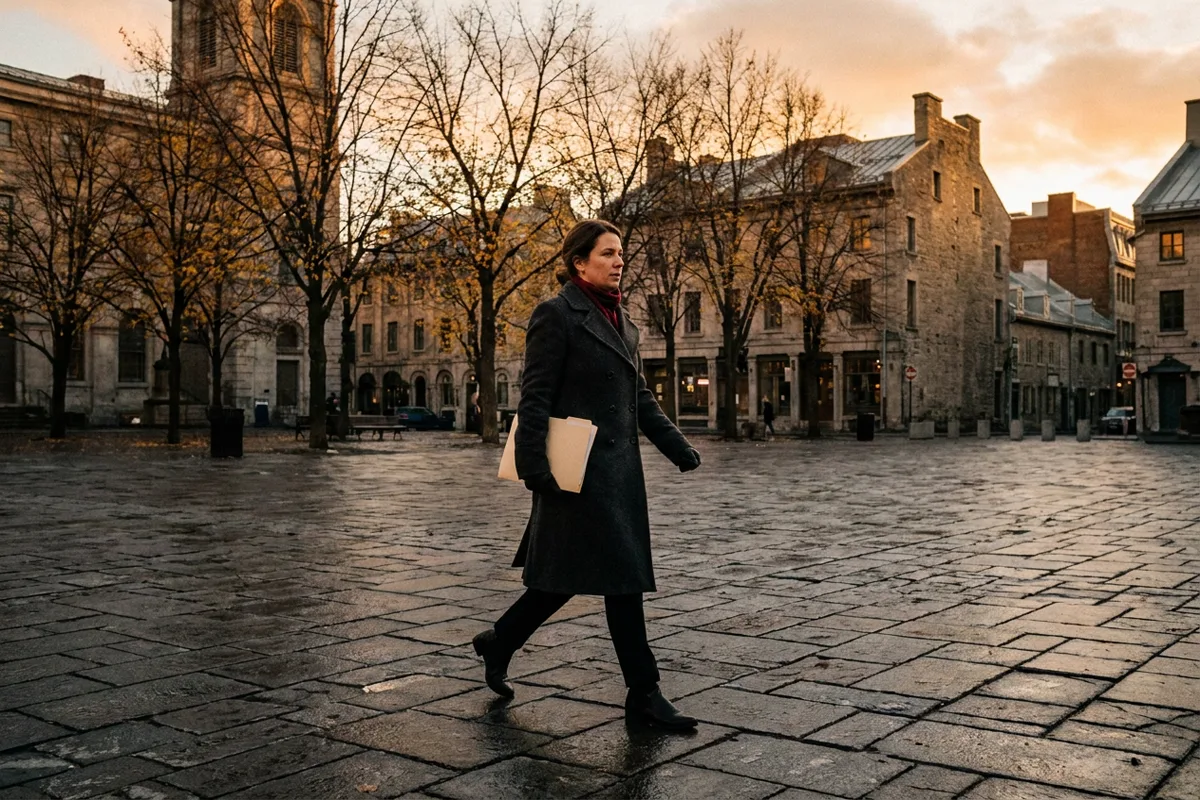
Woman crossing a historic cobblestone square in Quebec at dusk with a folder under her arm
  1. Submit the federal application soon after you receive your CSQ.
  2. Request police certificates early. They are the documents that take longest to arrive.
  3. Budget the fees for the whole family, including the right of permanent residence fee.
  4. Wait for IRCC’s instructions before booking the medical exam.

Where we come in

Castle & Co. follows the process from Arrima to arrival, which is the part that decides whether the CSQ turns into permanent residence without delays:

  • Preparing the federal application and the documents for the whole family
  • Planning police certificates country by country
  • Following up with IRCC until the decision

If you already have your CSQ, or expect it soon, start your process now and we will prepare the next stage with you.

On this page

Talk to a licensed consultant

We prepare your file end-to-end — from the paperwork to the final decision.

Start Now
Scroll to Top